
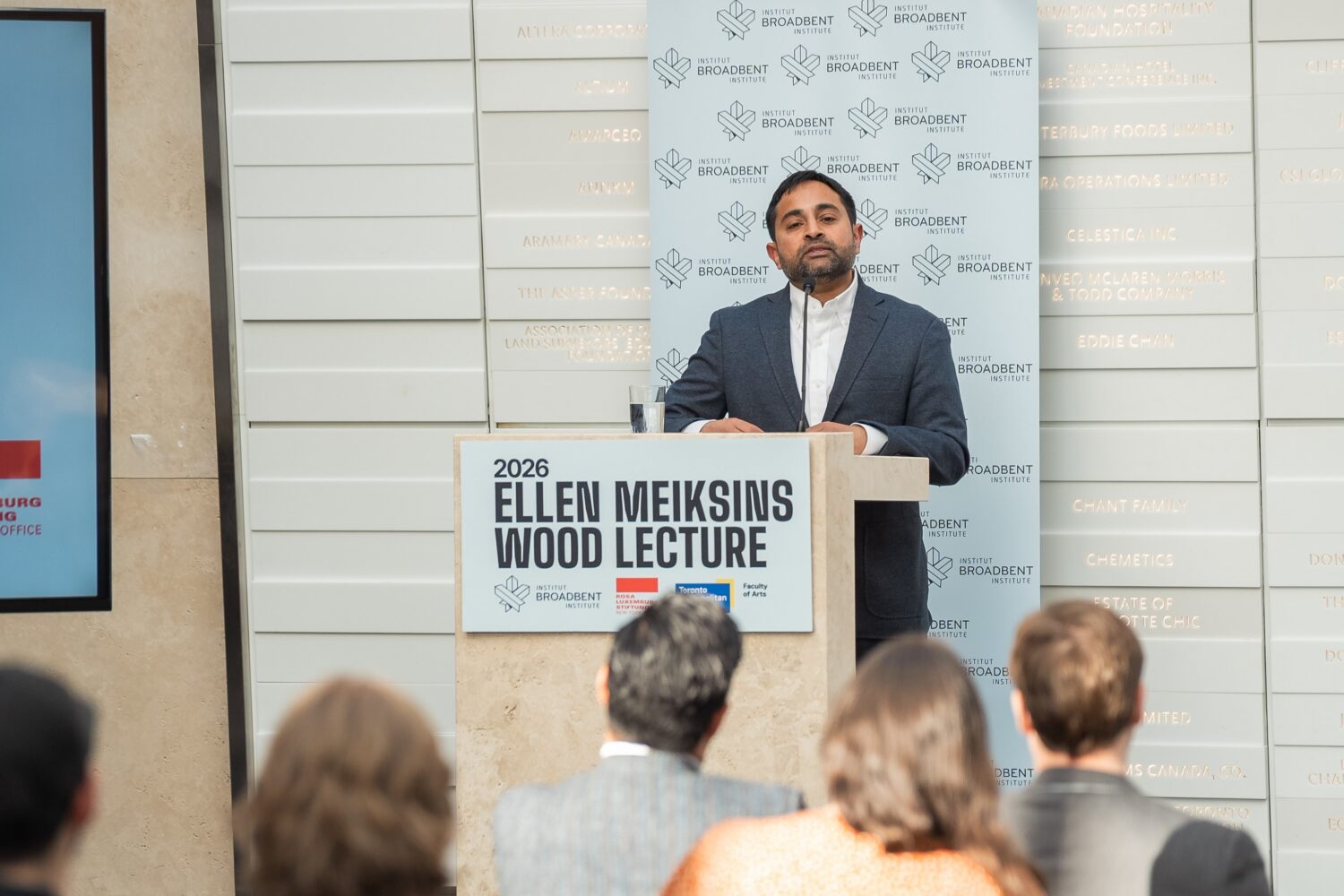
The 2026 Ellen Meiksins Wood Lecture was held on April 22 at Toronto Metropolitan University and brought together students, scholars, and organizers for a night of engaging discourse and conversation with Bhaskar Sunkara, founding editor of Jacobin and recipient of the 2026 Ellen Meiksins Wood Prize. The annual event by the Broadbent Institute was hosted again this year by Toronto Metropolitan University, Faculty of Arts with support from the Rosa Luxemburg Stiftung – New York Office. Read and listen to the full lecture in Perspectives Journal.
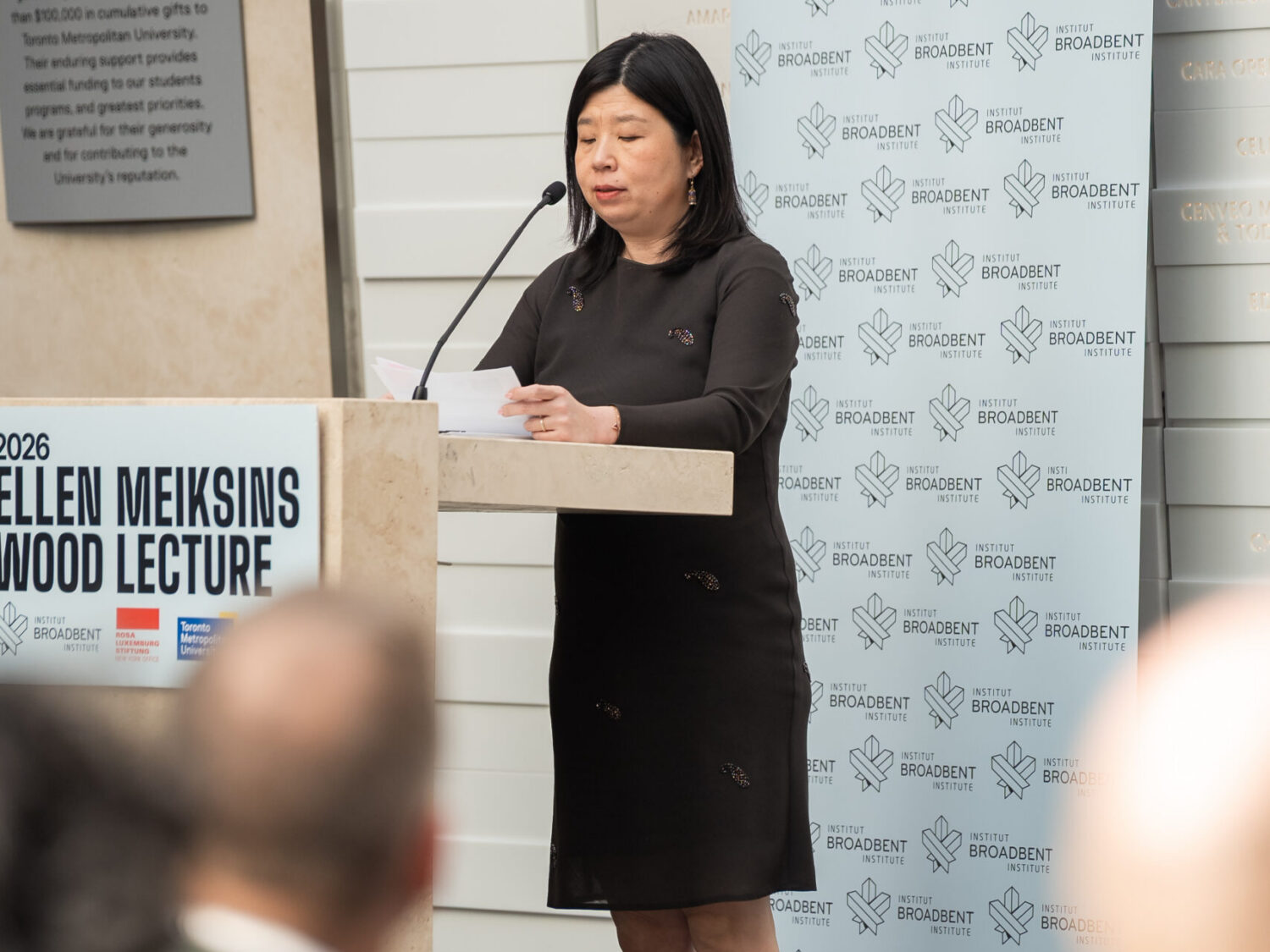
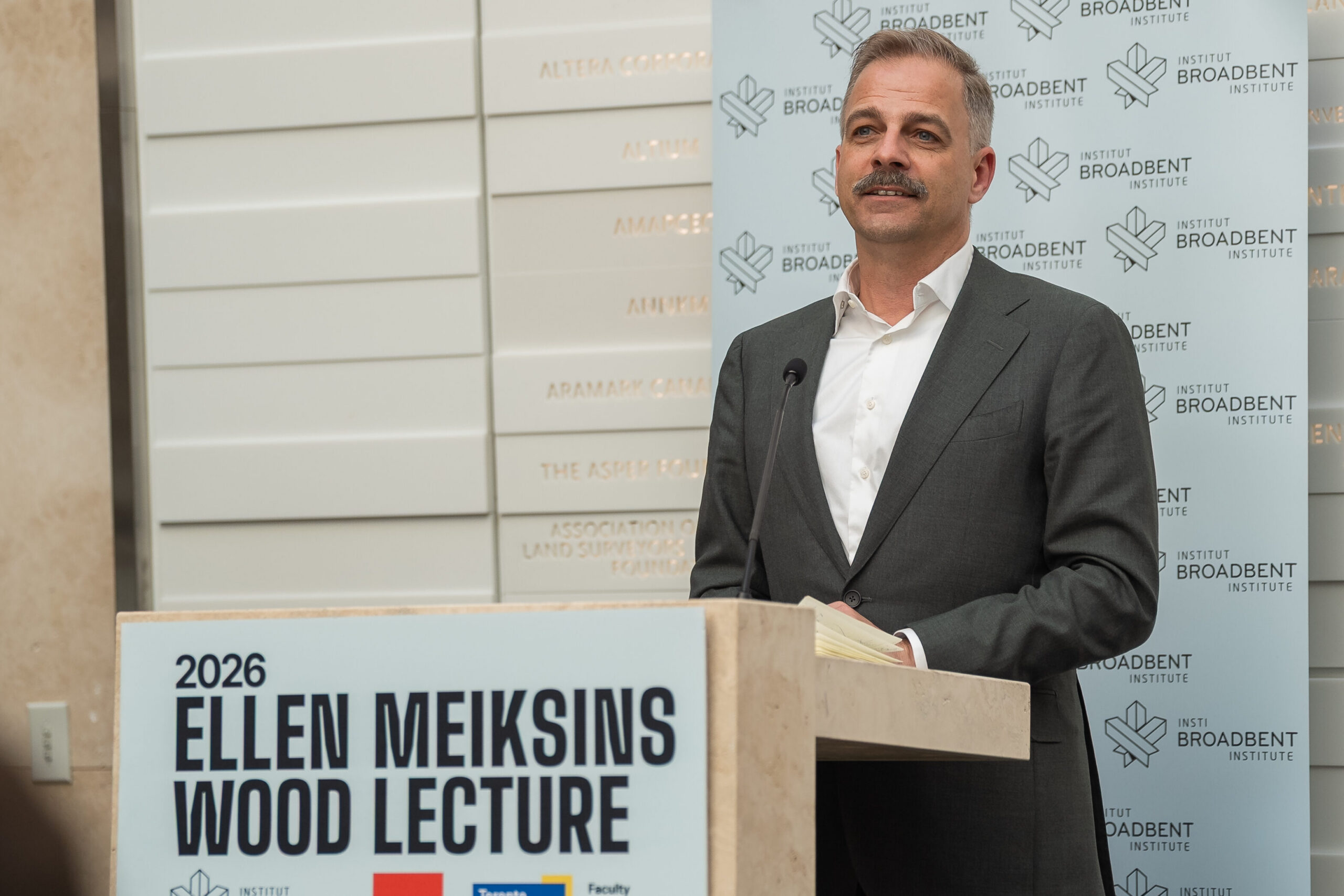
Opening remarks highlighted the importance of connecting big ideas to public life. Toronto Metropolitan University’s Faculty of Arts Dean, Professor Amy Peng acknowledged the sold out event as evidence of a resurgent interest in rethinking democracy. Rather than accepting capitalism as inevitable, Dr. Peng encouraged the audience to question its limits. RLS-NYC Director Stefan Liebich noted in his introduction to Sunkara that defending democracy also requires strengthening civil society and engaging people directly in political life.
Sunkara’s lecture built directly on this foundation, offering a working blueprint for socialism today. He emphasized that socialist movements must be rooted in real-world conditions, connecting theory to practice. A key thesis of the lecture, laid out in Ellen Meiksins Wood’s The Origin of Capitalism, was that capitalism is not a permanent or natural system. While capitalism is often presented as inevitable, it is historically produced and therefore open to change.
Sunkara’s vision for a modern variety of socialism criticised the market dependence of historical Swedish social democracy, as well as the centralized planning of the Soviet Union. Institutional change and a new path that learns from the failures of the past requires a new “market socialism” that offers real economic democracy. He argued that change must involve transforming existing institutions while building new ones. Today, Zohran Mamdani’s historic mayorship of New York City represents a new generation of political actors working within democratic systems to push socialist ideas forward, however, to truly succeed as a movement, policy reform must evolve further into systemic socialist transformation.
Socialism, if it means anything, must abolish that condition. No one’s ability to eat, access care, to educate their children or secure housing should hinge on their position within the market. That’s the heart of the socialist promise and we shouldn’t let it go. But incentives for participating in markets, for participating in the economy’s complex network of production, could help generate the surplus that makes the elimination of market dependence possible in the first place.
Bhaskar Sunkara, 2026 Ellen Meiksins Wood Lecture
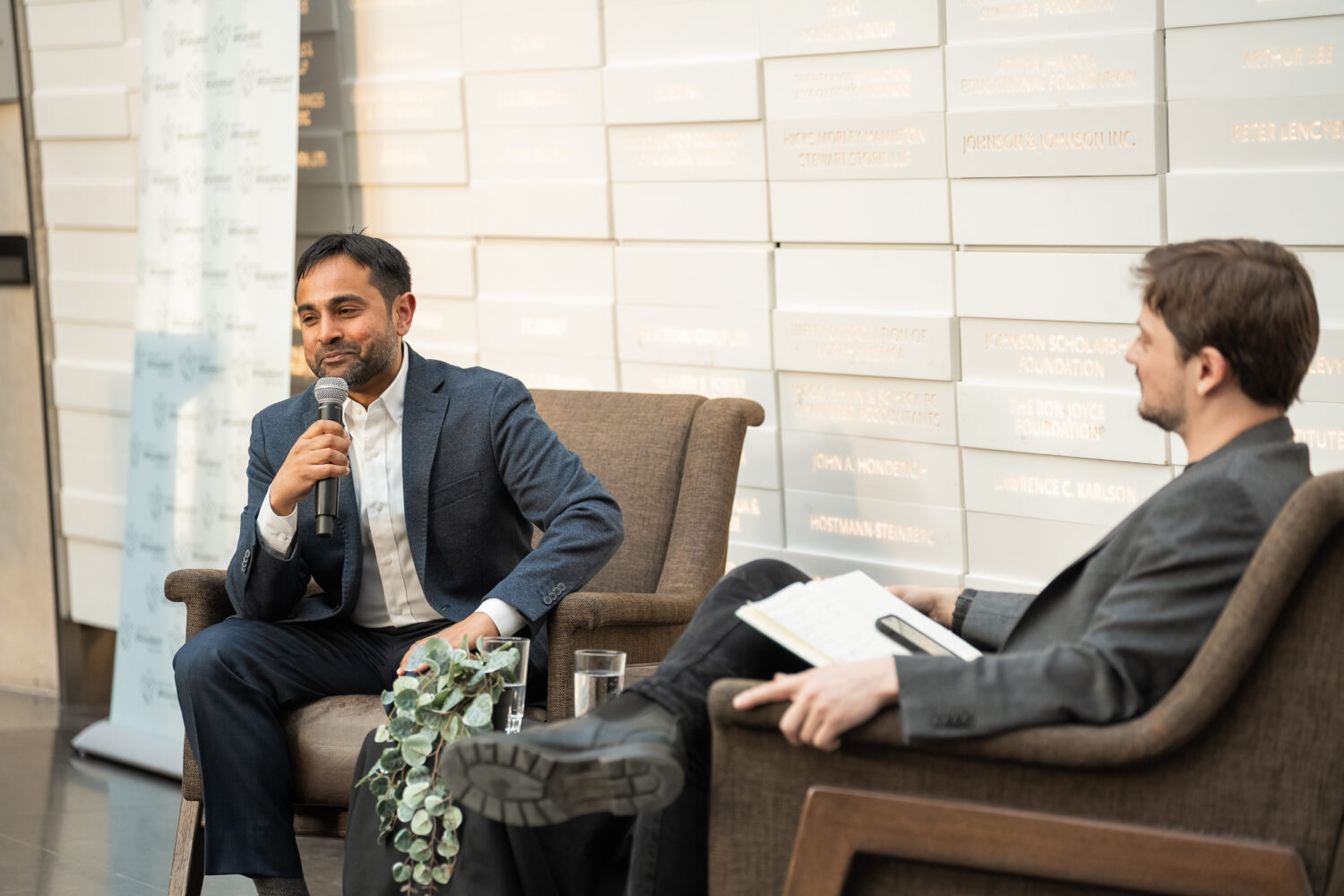
The lecture was followed by a conversation between Ed Broadbent’s Seeking Social Democracy co-author Luke Savage and Sunkara. Savage and Sunkara discussed the lecture’s thesis and vision for modern socialism further, and teased the upcoming book from Sunkara and co-authors Ben Burgis and Mike Beggs entitled, The Blueprint: How Socialism Can Work in the Real World. At the end of the interview, Sunkara was presented the 2026 Ellen Meiksins Wood Prize by Amy Peng, Stefan Liebich, and the Broadbent Institute’s Clement Nocos.
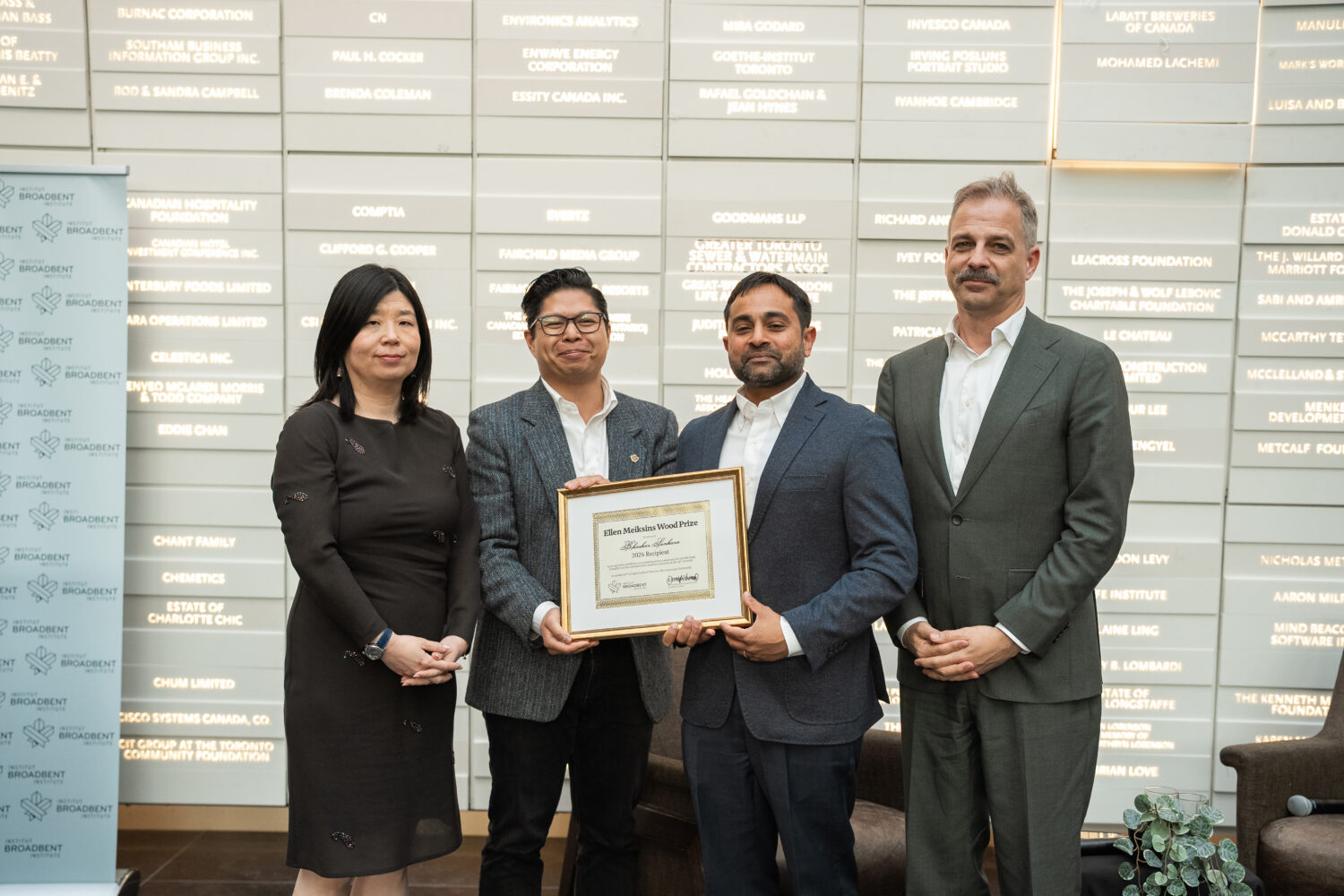
In recognition of Ellen’s distinguished legacy of historical scholarship on political thought, the Ellen Meiksins Wood Prize is given annually to an academic, labour activist or writer and recognizes outstanding contributions in political theory, social or economic history, human rights, or sociology. The $10,000 award is conferred annually to an academic, labour activist or writer who has made an outstanding contribution in political theory, social or economic history, human rights, or sociology. It acknowledges Ellen’s legacy of historical scholarship on political thought.