
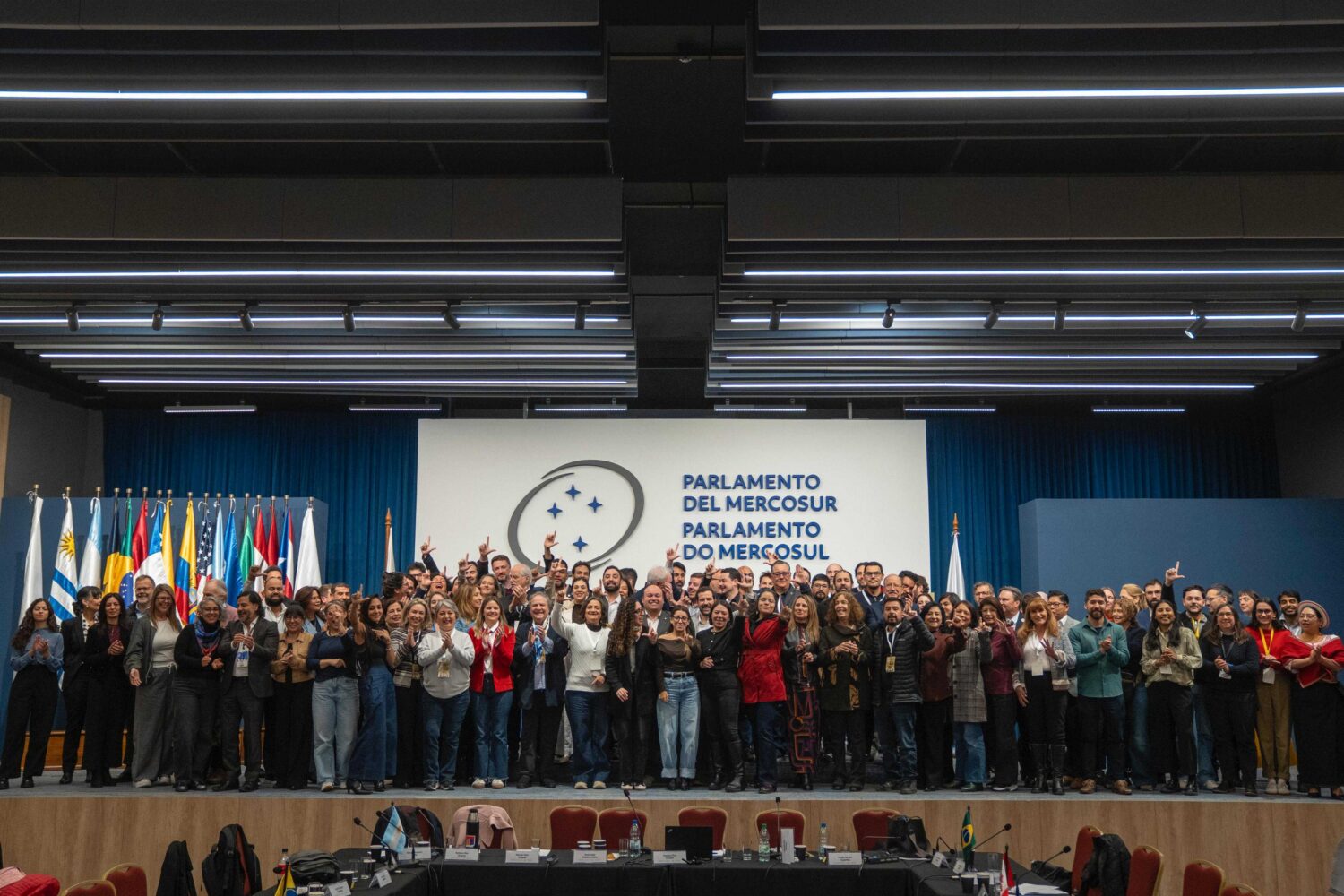
We, the undersigned parliamentarians and members of the Panamerican Congress, address the peoples and parliaments of the Americas ahead of the second round of Brazil’s presidential election, to be held on 25 October.
We raise our voices against the growing foreign interference and the unlawful use of coercive measures that threaten the sovereign right of the Brazilian people to determine their own future freely. Many of us have confronted these same practices in our own countries: intimidation, blackmail and coercion intended to distort the popular will, influence democratic processes and subordinate the sovereign decisions of our peoples to foreign interests. We know that these threats are not isolated incidents. They are manifestations of an explicit policy of intervention linked to a renewed interpretation of the Monroe Doctrine—one that seeks to reassert United States primacy in the hemisphere and influence the political, economic and strategic direction of our nations. Decisions that belong solely to the people at the ballot box are being subjected to pressure from abroad.
In July 2025, the Trump administration imposed tariffs of up to 50 per cent on Brazilian products, citing, among other grounds, the judicial proceedings against Jair Bolsonaro. In February 2026, the United States Supreme Court ruled that the law invoked by the administration did not authorise the President to impose those measures. The Trump administration subsequently pursued a different legal route and, in July 2026, introduced a new 25 per cent tariff, citing Brazil’s Pix payment system and its regulation of digital platforms among its stated grounds.
Article 20 of the Charter of the Organization of American States prohibits any state from using coercive measures of an economic character to force the sovereign will of another state. The burden of these unilateral measures falls directly upon Brazilian workers, producers and families who have no part in the underlying political dispute. In practice, they amount to a form of collective punishment against the people of Brazil.
Major digital platforms based in the United States have themselves become actors in the electoral campaign. On 23 September, ten days before the first round, Meta disabled the advertising account of Luiz Inácio Lula da Silva’s campaign without specifying which rule had allegedly been breached. The organisation CTRL+Z documented more than 1,100 cases involving the suspension, restriction or reduced reach of accounts and profiles supportive of Lula’s candidacy across Facebook, Instagram and WhatsApp. Meta attributed these incidents to “technical failures” and denied any intention to favour a candidate or political actor. Nevertheless, the matter is deeply concerning: a small number of foreign corporations exercise enormous power over what can circulate within Brazil’s public debate, while the United States government uses tariffs as an instrument of pressure against Brazil’s efforts to regulate those same companies.
In July 2025, the Trump administration imposed sanctions and revoked the visas of Brazilian judges and senior officials in response to the judicial proceedings against Jair Bolsonaro. In July 2026, Brazil denied entry to two senior officials from the United States Department of State who, according to reports in the US press, intended to meet critics of Brazil’s electoral system and prepare a report on the country’s electronic voting machines—the same system that Bolsonaro’s political movement sought to discredit in 2022. US Secretary of State Marco Rubio responded by revoking the diplomatic visa of Brazil’s ambassador to Washington. On 2 October, two days before the first round, the United States closed its embassy and consulates in Brazil on stated security grounds and reopened them the day after the vote.
Behind these actions lies a political relationship that has been built and cultivated over many years. In 2024, Eduardo Bolsonaro followed the counting of the United States presidential election alongside Donald Trump at Mar-a-Lago. In May 2026, Trump received Flávio Bolsonaro in Washington in a meeting that did not appear on the President’s official schedule. Only weeks later, Washington imposed a new tariff on Brazilian goods.
The growing interest in shaping Brazil’s political future is not accidental. Brazil occupies a central position in the global geopolitical contest. Its extraordinary wealth of strategic natural resources—including significant reserves of rare earth elements and other critical minerals, vast freshwater resources, energy reserves and exceptional biodiversity—combined with its industrial capacity and its economic and political influence, makes Brazil a decisive actor in Latin America’s future and in the emergence of a new international order. Eduardo Bolsonaro himself declared in August 2025 that, if necessary, they were prepared to “sacrifice everything and burn the entire forest.”
These efforts also seek to defeat a project of social justice that, over the past four years, has served sectors of the population historically excluded from national life and begun rebuilding a social fabric severely damaged by the 2016 parliamentary coup and its consequences. Under President Lula, more than 40 million people overcame food insecurity, and Brazil once again succeeded in leaving the United Nations Hunger Map.
What is happening in Brazil today has already been experienced elsewhere in our region. In Argentina, Washington offered a financial rescue package while warning that it would cease to be “generous” if the governing coalition lost the election. In Honduras, Trump threatened to reassess United States assistance if his preferred candidate did not prevail and, in the midst of the campaign, pardoned former president Juan Orlando Hernández, who had been convicted of drug-trafficking offences. In Colombia, he tied the future of bilateral relations to the victory of the candidate he supported.
In light of these developments, we, the undersigned, call upon parliamentarians, political parties, trade unions and social movements throughout our hemisphere and across the world to speak out in defence of Brazil’s sovereignty and the inalienable right of its people to determine their future freely. We call on all democratic forces to remain vigilant, to expose and condemn any attempt at external interference before, during or after 25 October, and to demand full and unconditional respect for the will of the Brazilian people as expressed at the ballot box. Tomorrow may be too late.
Brazil is not the backyard of any foreign power. Brazil’s future belongs to its people—and to no one else.
1. 🇨🇴 Alejandro Ocampo Giraldo, Vice President of the Senate, Colombia
2. 🇪🇨 Ana Herrera Gómez, Assembly Member, Ecuador
3. 🇧🇷 Ana Pimentel, Federal Deputy, Brazil
4. 🇪🇨 Andrés Arauz, Former Coordinating Minister of Knowledge and Human Talent, Ecuador
5. 🇭🇳 Angelica Smith, Deputy, Honduras
6. 🇦🇷 Ariel Navarro, Red Futuro, Argentina
7. 🇪🇨 Arisdely Parrales, Assembly Member, Ecuador
8. 🇲🇽 Beatriz Silvia Robles Gutiérrez, Senator, Mexico
9. 🇪🇨 Bertha Vélez, Assembly Member, Ecuador
10. 🇺🇾 Bettiana Díaz Rey, Senator, Uruguay
11. 🇨🇱 Camila Vallejo, Former Government Spokesperson Minister and former Deputy, Chile
12. 🇲🇽 Carolina Rangel Gracida, Secretary General of Morena, Mexico
13. 🇦🇷 Cecilia Nicolini, Deputy to the Parlasur, Argentina
14. 🇺🇸 Chris Rabb, Democratic Nominee for U.S. House of Representatives (PA-03), United States
15. 🇨🇴 Clara López Obregón, Former Senator and former Minister of Labor, Colombia
16. 🇺🇾 Constanza Moreira, Senator, Uruguay
17. 🇨🇱 Constanza Schönhaut Soto, Deputy, Chile
18. 🇦🇷 Deanes Alejandro Martín, Member of the Mercosur Parliament, Argentina
19. 🇨🇦 Don Davies, Member of Parliament, Canada
20. 🇪🇨 Eliana Correa, Assembly Member, Ecuador
21. 🇨🇴 Ernesto Samper Pizano, Former President, Colombia
22. 🇵🇾 Esperanza Martínez, Senator, Paraguay
23. 🇺🇾 Federico Preve Cocco, Deputy, Uruguay
24. 🇪🇨 Fernando Cedeño Rivadeneira, Assembly Member, Ecuador
25. 🇪🇨 Franklin Samaniego, Assembly Member, Ecuador
26. 🇦🇷 Gabriel Fuks, Member of the Mercosur Parliament, Argentina
27. 🇪🇸 Gerardo Pisarello, Deputy, Spain
28. 🇪🇨 Germania Romero, Assembly Member, Ecuador
29. 🇨🇱 Giorgio Jackson, Former Deputy and former Minister Secretary General of the Presidency and of Social Development, Chile
30. 🇨🇱 Gonzalo Winter, Deputy, Chile
31. 🇲🇽 Guillermo Santiago, Deputy, Mexico
32. 🇪🇨 Gustavo Mateus Acosta, Assembly Member, Ecuador
33. 🇪🇨 Héctor Valladarez, Assembly Member, Ecuador
34. 🇭🇳 Hugo Noé Pino, Deputy, Honduras
35. 🇺🇸 Hugo Soto-Martinez, Los Angeles City Councilmember, United States
36. 🇪🇨 Humberto Alvarado Espinel, Assembly Member, Ecuador
37. 🇺🇾 Inés Cortés, Deputy, Uruguay
38. 🇦🇷 Itai Hagman, National Deputy, Argentina
39. 🇪🇨 Jahiren Elizabeth Noriega Donoso, Assembly Member, Ecuador
40. 🇨🇱 Jeannette Jara, Former Minister of Labor and former presidential candidate, Chile
41. 🇨🇦 Jennifer Hassum, Executive Director of the Broadbent Institute, Canada
42. 🇨🇦 Jenny Kwan, Member of Parliament, Canada
43. 🇺🇾 Joaquín Garlo, Deputy, Uruguay
44. 🇪🇨 José Vallejo, Assembly Member, Ecuador
45. 🇦🇷 Josué Gagliardi, Member of the Parlasur, Argentina
46. 🇪🇨 Juan Pablo Molina Saldaña, Assembly Member, Ecuador
47. 🇨🇱 Juan Santana Castillo, Deputy, Chile
48. 🇨🇱 Karol Cariola Oliva, Senator, Chile
49. 🇦🇷 Karolina Bobadilla, Member of the Parlasur, Argentina
50. 🇧🇷 Larissa Ramina, Professor of International Law at UFPR, Brazil
51. 🇨🇦 Leah Gazan, Member of Parliament, Canada
52. 🇪🇨 Lenin Daniel Barreto Zambrano, Assembly Member, Ecuador
53. 🇪🇨 Liliana Durán Aguilar, Assembly Member, Ecuador
54. 🇧🇷 Luciene Cavalcante da Silva, Federal Deputy, Brazil
55. 🇭🇳 Lucy Michell Guerrero Paz, Deputy, Honduras
56. 🇵🇷 María de Lourdes Santiago, Senator, Puerto Rico
57. 🇨🇴 María Fernanda Carrascal Rojas, Member of the House of Representatives, Colombia
58. 🇪🇨 María Gabriela Molina Menéndez, Assembly Member, Ecuador
59. 🇨🇴 María José Pizarro, Former Senator, Colombia
60. 🇲🇽 María Magdalena Rosales Cruz, Deputy, Mexico
61. 🇦🇷 Mariana Urbano, Member of the Mercosur Parliament, Argentina
62. 🇪🇨 Mariana Yumbay Yallico, Assembly Member, Ecuador
63. 🇦🇷 Mariano Fernández, Member of the Mercosur Parliament, Argentina
64. 🇨🇱 Marta González, Former Deputy, Chile
65. 🇪🇨 Melissa Zambrano, Assembly Member, Ecuador
66. 🇪🇨 Mireya Pazmiño Arregui, Assembly Member, Ecuador
67. 🇪🇨 Mónica Alemán, Assembly Member, Ecuador
68. 🇪🇨 Nanki Saant, Assembly Member, Ecuador
69. 🇧🇷 Orlando Silva, Federal Deputy, Brazil
70. 🇪🇨 Paola Cabezas Castillo, Assembly Member, Ecuador
71. 🇭🇳 Rafael Sarmiento, Deputy, Honduras
72. 🇦🇷 Raúl Bittel, Member of the Mercosur Parliament, Argentina
73. 🇪🇨 Ricardo Patiño Aroca, Assembly Member, Ecuador
74. 🇨🇱 Rodrigo Ignacio Astorga Hering, Heinrich Böll Stiftung, Chile
75. 🇪🇨 Roque Martín Ordóñez, Assembly Member, Ecuador
76. 🇪🇨 Sandra Figueroa Aguilar, Assembly Member, Ecuador
77. 🇨🇦 Savhanna Wilson, Chief of Staff of the NDP, Canada
78. 🇺🇾 Sebastián Sabini, Senator, Uruguay
79. 🇭🇳 Sergio Arturo Castellanos, Deputy, Honduras
80. 🇪🇨 Silvia Patricia Núñez Ramos, Assembly Member, Ecuador
81. 🇨🇱 Tatiana Urrutia, Deputy, Chile
82. 🇪🇨 Verónica Íñiguez Gallardo, Assembly Member, Ecuador
83. 🇪🇨 Victoria Desintonio Malavé, Assembly Member, Ecuador
84. 🇨🇱 Vlado Mirosevic, Senator, Chile