
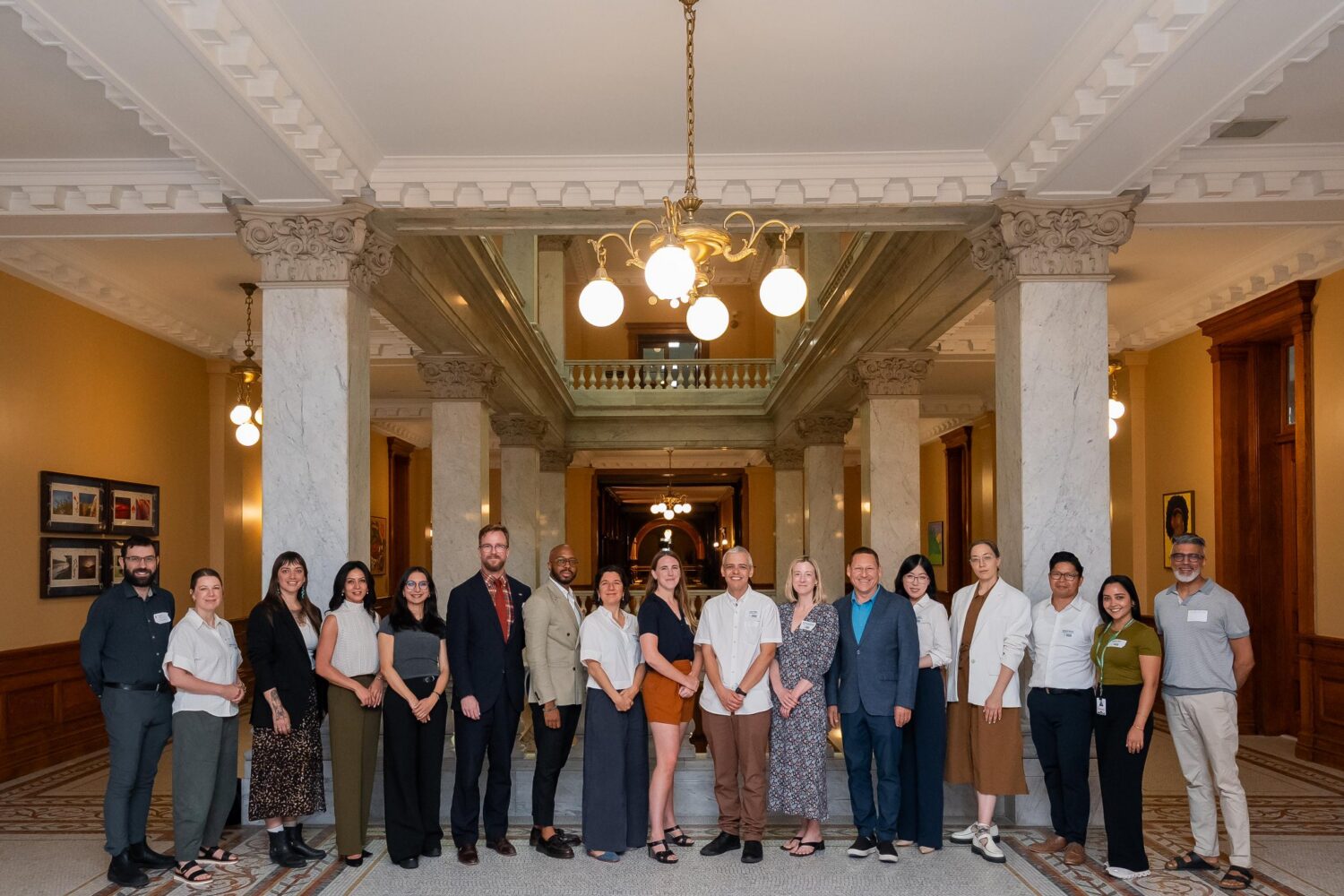
TORONTO – Legislators and experts from across North, Central and South America gathered this Thursday, July 9 at the Legislative Assembly of Ontario for the seminar “Democratic AI & Digital Sovereignty,” the third preparatory meeting on the road to the 2026 Panamerican Congress. The roundtable convened perspectives from Canada, Chile, Costa Rica, and the United States and stressed the urgency of advancing a digital sovereignty agenda that transcends national initiatives and projects itself as a shared hemispheric strategy.
The discussion addressed the challenges posed by the concentration of technological power in a handful of corporations: dependence on foreign digital infrastructure, the impact of artificial intelligence on jobs and public services, platform regulation, and the protection of democratic processes. Participants stressed that the fragmentation of digital policies weakens the region’s countries in the face of actors that already operate in a coordinated, global manner.
The workshop included discussions on topics as diverse as the resistance movements against the installation of massive data centres and their socio-environmental impacts, the negative effects of the indiscriminate use of artificial intelligence tools in education, and the human rights violations occurring through the implementation of these technologies in Israel’s invasion of Palestine.
National Experiences and Warnings

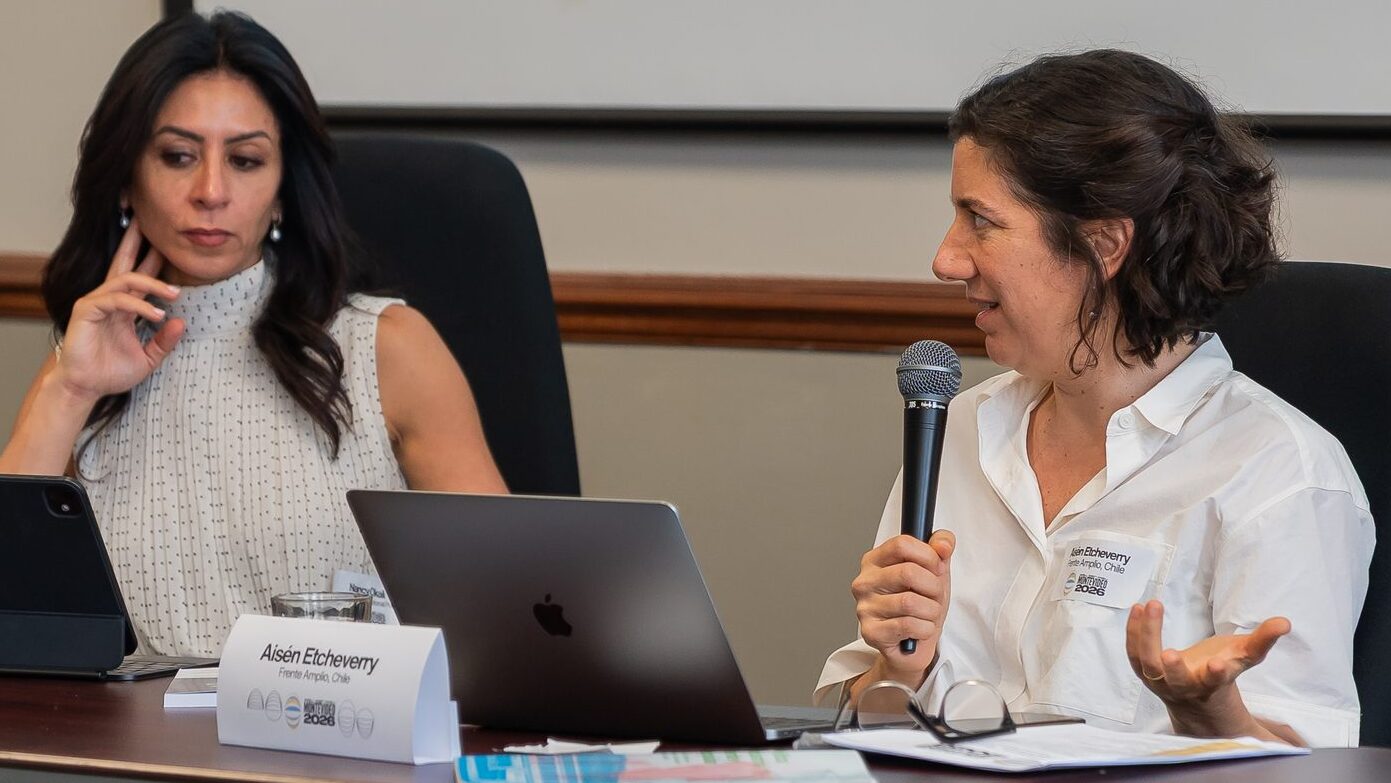
The day culminated with a public event with the Leader of Canada’s New Democratic Party, Avi Lewis; Chile’s former Minister of Science, Technology, Knowledge and Innovation, Aisén Etcheverry; the President & CEO of the Centre for International Policy (the US), Nancy Okail; and Frente Amplio Deputy for Alajuela (Costa Rica), Sigrid Segura, at Toronto Metropolitan University.
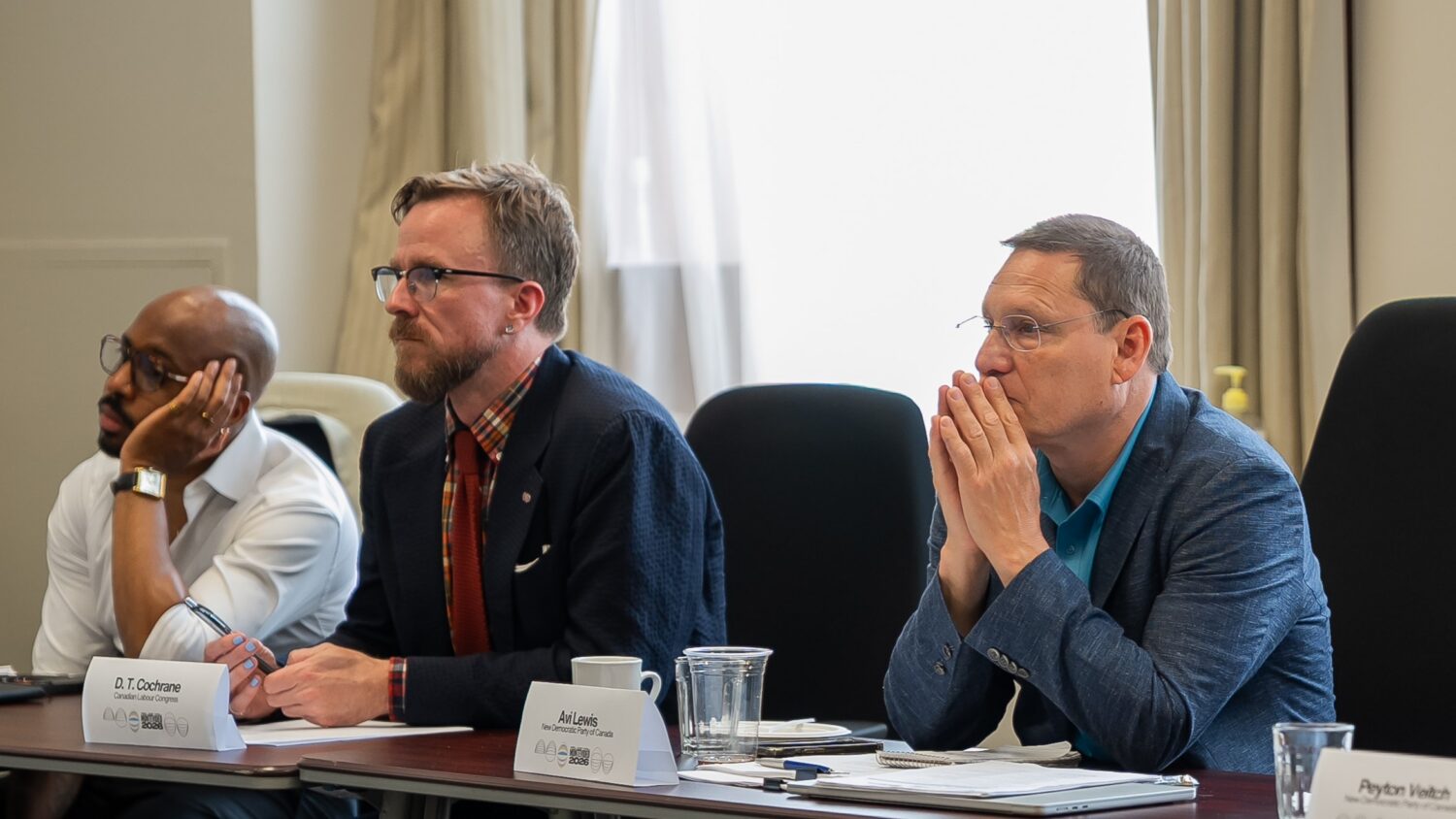
Lewis warned that, “Canada might be among the top three AI-captured countries on Earth right now. And I don’t think we know it yet.” He added that:
The federal government announced a plan to slash $60 billion in public spending in the fall budget. And 44,000 federal employees in Canada are being fired. And we’ve talked to people in public sector unions, but the government has not hidden this at all: that the goal is for AI to replace those jobs. These are jobs in food inspection and food safety. These are jobs in the immigration system. These are jobs in the justice system. So, the threat is incredibly real. It’s happening now. Two-thirds of Canadians said they want heavy regulation on this technology. So, I think we’re in a pivotal moment as people become aware of the risks.
Okail argued that:
The question is not whether we want AI or not. The question is we want AI that is a public good or owned by a private empire. How can we democratize AI? What’s happening right now in the US is exactly the opposite on so many levels. We are living in a time where the landlords in Silicon Valley are in control, and we are the renters. The question is, how can we move from being tenants to being citizens with rights? I’m not here to say it’s like we should stop AI. I argue that regulation is part of the answer, but is not the answer, because it is very difficult to imagine, with all the power and resources and also the demand for AI, that we can stop it. The idea is to make it more democratic.
Etcheverry shared Chile’s recent experience. “We have Chilean government officers with their visas to the US being cancelled because they approved some permits for a Chinese company to build digital infrastructure. It was a complete change of scenario that we are dealing with right now.” She explained that:
During President Boric’s presidency, we worked on an artificial intelligence regulation that was supposed to give a framework for the AI world in the country. We have worked in connect with other Latin American countries to have regulations that are similar, but also to share infrastructure and to share projects because we truly believe, at least we did in the previous government, that through that collaboration and through exchanging capacities in infrastructure and in regulation, we were able to create enough power, resilience, and redundancy to actually have a say on how this technology will be developed for the next 10 or 20 years.
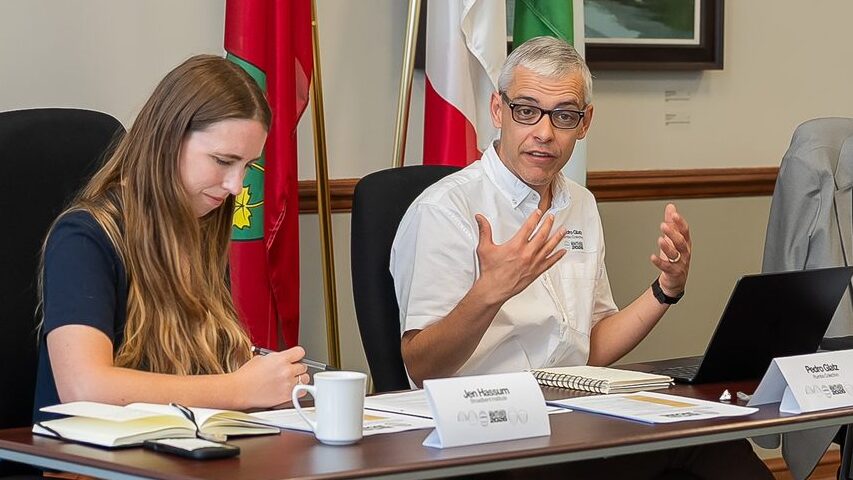
The seminar was co-organized by the Broadbent Institute and Rumbo Colectivo, together with the Panamerican Congress. The Executive Director of the Broadbent Institute, Jen Hassum, said that:
The impact of digital infrastructure, data, and artificial intelligence on global systems has been swift, and we are living through economic, social and cultural changes. Laws, like the Cloud Act, and monopolistic corporate dominance threaten sovereignty, privacy, democracy, people’s jobs, and the land — everything is at risk. Humanity has always been confronted with changing technology, and a hard lesson is that we mustn’t simply avoid technological development and be left behind, dominated by these powers. No. Progressives around the world need to come together, learn from one another about what building alternatives look like. I for one am truly hopeful.
Meanwhile, board member of Rumbo Colectivo, Pedro Glatz, noted that:
We know who we are facing. We know that these corporations that we can name with one hand, are the ones controlling most of our interactions nowadays. And it’s an economic sector that it’s probably the most privatized one that we have ever experienced and so dominant. So, against that situation, we’re witnessing probably the biggest governance gap that we have ever seen from such a powerful and dangerous economic sector. So we know that national states currently lack the tools to steer digital development towards equitable benefits and public action, like a real effective public action that can actually use these technologies for the common good.
Road to the 2026 Panamerican Congress
The contributions gathered during the seminar will be a valuable input for the 2026 Panamerican Congress. It will convene from August 21 to 23 in Montevideo, Uruguay, with over 100 people from 15 countries across the continent. The next preparatory meeting will take place in Mexico City in August and will focus on multilateralism.
The Panamerican Congress, founded in 2024, aims to establish itself as a permanent forum for dialogue among the continent’s legislators, coordinating common responses to shared challenges under the principles of solidarity among peoples and sovereignty among nations. Following its sessions in Bogotá and Mexico City, with delegates from more than 12 countries.
View the Event Livestream
For media inquiries, contact: communications@broadbentinstitute.ca
Former Innovation Minister Etcheverry (Chile), is available for further comment and interviews.
For more info on the event, visit: broadbentinstitute.ca/events/progressive-digital-sovereignty
About the Broadbent Institute
The Broadbent Institute is Canada’s preeminent social democratic think-tank. Founded in 2011 by Ed Broadbent, and guided by the Broadbent Principles for Canadian Social Democracy, the Institute produces original research, convenes progressive dialogues, and trains organizers and leaders to equip social movements working to advance justice and equality.
About Rumbo Colectivo
Rumbo Colectivo is a left-wing think tank that works to improve public policy and democracy so that Chile can become a country that cares for everyone. We propose evidence-based policies, bring them to public debate, and create spaces for dialogue about them and the future of democracy. We believe in innovation to face an uncertain future. We are critical of gender inequalities, and therefore apply a feminist perspective to our work. We work to reconfigure the relationship between nature and society to radically reduce our environmental impact.
About the Panamerican Congress
The Panamerican Congress, founded in 2024, aims to establish itself as a permanent forum for dialogue among the continent’s legislators and to coordinate common responses to shared challenges, guided by the principles of solidarity among peoples and sovereignty among nations. Following its previous sessions in Bogotá and Mexico City, the next session will take place in Montevideo in August 2026 and will bring together representatives from 15 countries in the Americas, under the leadership of President Yamandú Orsi. The next workshop will be held in Mexico City in August, and it will focus on Multilateralism.